
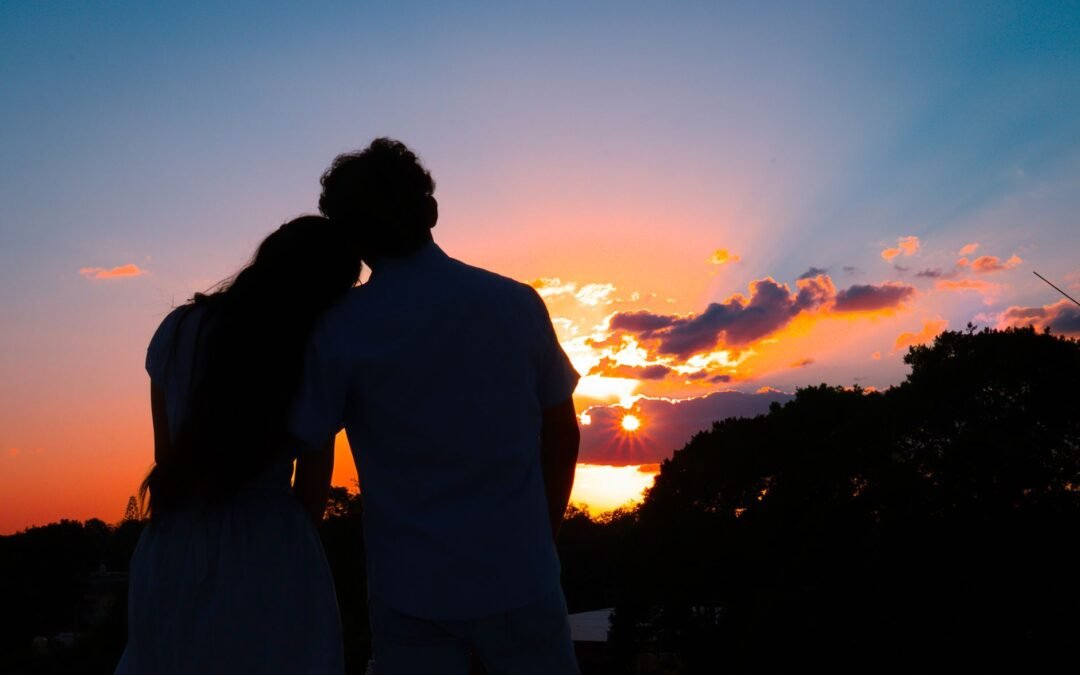
They have shared a dozen conversations, a few awkward silences, and one moment in the kitchen that neither of them has mentioned since. Everyone can see what’s happening. They can probably see it, too. But they’re not together. Not yet.
If you’ve ever found yourself muttering, “Would you two just kiss already?” at a book, you may have discovered the particular pleasure—and occasional agony—of a slow-burn romance.
Slow-burn romance means a love story in which attraction and emotional connection build gradually before the characters fully acknowledge or act on their feelings. The waiting is part of the experience. Done well, it makes a glance across a room feel as important as a declaration of love.
But slow burn doesn’t simply mean a romance with a late first kiss. There’s a difference between delicious anticipation and two people taking 300 pages to have a conversation they could have had on page 20.
What does slow-burn romance mean?
In a slow-burn romance, the relationship develops over time. The characters might notice each other immediately, or they might begin as friends, rivals, neighbors, or two people who barely tolerate being in the same room. What matters is that the emotional and romantic payoff arrives after a meaningful buildup.
Instead of rushing straight to a relationship, the story gives readers room to watch small changes: a joke that becomes an inside joke, a favor offered without being asked, a difficult truth shared, a moment when one character realizes the other has been paying attention all along.
Sometimes there’s an obvious reason the characters hesitate. They may be recovering from heartbreak, uncertain about their futures, afraid of damaging a friendship, or convinced the timing is wrong. Other times, the obstacle is less dramatic: neither person knows whether the feeling is mutual.
There is no official page number that makes a romance “slow burn.” A novella and a 500-page novel can both use gradual romantic pacing. The important question is whether the relationship keeps changing as the story moves forward.
Why do readers love a slow-burn romance?
The smallest moments suddenly matter
In a fast-moving romance, a kiss might happen early. In a slow burn, the moment a character reaches across the table and takes someone’s hand can be the scene you remember.
That’s because the reader has been collecting evidence. We noticed when he remembered how she takes her coffee. We noticed when she defended him after an unfair comment. We noticed the conversation they kept replaying afterward. A small gesture lands differently when it carries the weight of everything that came before it.
We get to know the people before they become a couple
Attraction is easy to understand. Two people can find each other appealing in a single scene. Trust, though, takes more work.
A good slow burn gives both characters lives beyond their attraction. They have responsibilities, old wounds, bad habits, private hopes, and decisions to make. We see why getting together matters to them—and why it might be frightening.
That makes the eventual relationship feel like a choice rather than simply the next expected step in the plot.
Anticipation becomes its own reward
There is a special sort of reader frustration that sounds like this: “I cannot believe he didn’t say anything.” Followed immediately by: “One more chapter.”
The best slow burns make the wait enjoyable because something keeps happening beneath the surface. The characters learn more about each other. Their assumptions change. The risks of admitting their feelings grow. Even when they take a step backward, the relationship doesn’t return to where it started.
Book Riot’s discussion of slow-burn romances captures a big part of the appeal: readers are invested in the long-awaited moment when the characters finally act on feelings the story has been building.
Slow burn vs. insta-love: which is better?
Neither. They’re different reading experiences.
Insta-love usually means the characters develop powerful romantic feelings very quickly. Slow burn draws out the development or acknowledgment of those feelings. One gives you the rush of an immediate connection; the other invites you to savor the growing certainty that these two people belong together.
There’s room for both on a romance reader’s shelf. You might want a whirlwind love story one weekend and a romance that makes you wait for the first kiss the next.
And don’t confuse insta-attraction with insta-love. Two characters can feel an immediate spark and still take a long time to build a relationship. That’s a perfectly good setup for a slow burn.
Does slow burn mean the romance is clean or closed-door?
No. Slow burn describes pacing, not spice level.
A slow-burn book might be sweet, closed-door, or explicit. A romance can spend most of its pages building emotional tension and then include an open-door scene. Another might never go beyond a kiss. The label alone doesn’t tell you what will appear on the page.
If heat level matters to you, look for separate descriptions such as “closed-door romance,” “fade to black,” or “open-door romance,” and check reviews or content notes when available. Not every retailer or reviewer uses these terms in exactly the same way, so a sample can help.
What does a good slow burn look like in a small town?
Small-town settings offer wonderful opportunities for a romance that takes its time. The characters might run into each other at the diner, the hardware store, a town fundraiser, or somebody’s wedding. They can avoid a conversation for a day, maybe. Avoiding each other forever is a different matter when everyone shops at the same grocery store.
Imagine two people who keep meeting while helping organize a community event. At first they disagree about everything. Then they discover they’re both staying late to finish the work. One starts bringing an extra cup of coffee. The other quietly takes care of a problem nobody else noticed. By the time they’re alone together after the event, the reader understands that the relationship has changed—even if neither character has said the word love.
That is the pleasure of a slow burn: the romantic moments don’t have to announce themselves with fireworks. Sometimes they’re hiding in ordinary kindness.
If you enjoy romance set in close-knit communities, you might also like our article about small-town romance with older heroines, where the characters bring a little more life experience—and sometimes a few more complications—to the love story.
When does a slow burn become too slow?
Not every long wait is satisfying. A slow burn can become frustrating when the characters have the same misunderstanding over and over, refuse to speak honestly for no convincing reason, or spend chapters repeating a scene we’ve already read.
There’s a difference between something is keeping them apart and nothing is happening.
For me, the difference comes down to movement. Do the characters trust each other more than they did five chapters ago? Has one learned something that changes how they see the other? Is there a new reason the relationship feels possible—or impossible?
If the answer is yes, the story may be moving slowly, but it isn’t standing still.
How can you tell if a book is a slow-burn romance before you read it?
Book descriptions and reader reviews often provide clues. Look for phrases such as “slow burn,” “mutual pining,” “friends to lovers,” “years of unspoken feelings,” or “a friendship neither wants to risk.” Those aren’t guarantees, but they suggest a story that spends time developing its central relationship.
Be aware that friends to lovers and enemies to lovers are relationship setups, not pacing promises. Either can happen quickly or slowly. Likewise, a small-town romance doesn’t automatically qualify as a slow burn.
If you’re particularly sensitive to spoilers, read the description first and skim reviews carefully. Readers sometimes reveal the timing of the first kiss or confession when explaining just how slowly a romance burns.
Do slow-burn romances have happy endings?
Many do. In genre romance, readers generally expect an emotionally satisfying, optimistic ending for the central couple, whether that’s happily ever after or happy for now. A slow burn changes how the relationship develops; it doesn’t automatically change that expectation.
That said, some books marketed as romantic fiction focus on relationships without following every convention of genre romance. If a happy ending is nonnegotiable for you, check how the book is categorized and how readers describe its ending—without reading so far into reviews that you spoil the story.
Sometimes the wait is the best part
I’m not against a good first kiss. Far from it. But I do love a story that gives the kiss something to mean.
It’s the shared joke. The unexpected kindness. The realization that one character has become the person the other looks for in a crowded room. By the time they finally reach for each other, we aren’t simply cheering for two attractive people to get together. We’re cheering for everything they’ve had to understand, risk, and choose along the way.
That’s why slow-burn romance has such a devoted readership. The love story isn’t only about the moment the characters fall into each other’s arms. It’s about all the moments that made them want to.
If the small-town setting is what draws you in, start with What She Almost Became by K.A. Wirtz, about a woman returning to her hometown and reconsidering the future she thought she wanted. You can also explore K.A. Wirtz’s other books, including romance and mystery.