

In today’s publishing world, self-publishing offers authors full control over their work, from writing to production and sales. Whether you’re a first-time author or a seasoned writer looking to take control of your publishing career, this guide walks through the key steps and tools for publishing your book, from manuscript preparation to distribution and launch.
Editorial update: October 2026. Platform fees, royalties, distribution, ISBN, and copyright information were checked against official sources. The original URL is retained to preserve existing links.
Why Authors Choose Self-Publishing
The self-publishing industry has grown exponentially over the past decade. With platforms like Amazon KDP and Draft2Digital, authors can publish both ebooks and print books easily and affordably. Self-publishing has also shed the outdated stigma that once surrounded it. Today, many self-published books compete with traditionally published works in terms of quality and market success.
One of the biggest advantages is royalty control. Amazon KDP offers 35% and 70% eBook royalty options depending on eligibility, territory, price, and other conditions; delivery costs may apply. Print royalties are calculated differently and subtract printing costs. See KDP’s current eBook royalty rules and print royalty rules before estimating earnings. Additionally, platforms like IngramSpark ensure your print books are available to bookstores and libraries.
How to Self-Publish Your Book: A Step-by-Step Guide
1. Finalize Your Manuscript
Before publishing, ensure your book is polished. Use tools like ProWritingAid or Grammarly for self-editing, or hire a professional editor for a more thorough review. Remember, your reputation is tied to the quality of your book.
2. Choose the Right Platforms
- Amazon KDP: Best for ebooks and paperbacks sold on Amazon.
- Draft2Digital: Distributes your ebook to multiple stores (Apple Books, Kobo, etc.).
- IngramSpark: Ideal for authors who want their books available to bookstores and libraries.
Using KDP for Amazon print sales and IngramSpark for wider print distribution can make sense, but coordinate ISBNs and distribution settings to avoid duplicate listings. For eBooks, remember that KDP Select requires digital exclusivity during its enrollment term; authors distributing an enrolled eBook through other stores could violate those terms.
3. Format Your Book Professionally
For ebooks, use tools like Atticus or Vellum to format files correctly. For print, PDFs need to meet specific trim sizes and layout standards. Clean, professional formatting ensures a smooth reading experience on all devices.
4. Design an Eye-Catching Cover
A book’s cover plays a key role in grabbing readers’ attention. You can use Canva Pro for DIY covers, but investing in a professional designer often yields better results. Ensure the design looks great both as a thumbnail and in high-resolution.
5. Upload Your Book to Platforms

Once your files are ready, upload them to Amazon KDP or Draft2Digital. These platforms guide you step-by-step through setting your metadata (title, keywords, and book description) to optimize discoverability.
Print-on-Demand vs. Offset Printing
For physical books, most self-published authors rely on print-on-demand (POD) to avoid high upfront costs. POD services print and ship books only when a customer orders, minimizing inventory risks.
- Amazon KDP: Quick POD services for paperbacks sold on Amazon.
- IngramSpark: Offers broad print distribution and currently charges no fee to create an account or set up a new book; printing and other services can still cost money. See IngramSpark’s current FAQ.
Offset printing is more cost-effective for large print runs but requires upfront investment and storage.
ISBNs and Copyright Essentials
Amazon KDP eBooks do not require ISBNs, while print editions generally need them. U.S. authors can buy ISBNs from Bowker or use a platform-provided ISBN when eligible; a free platform ISBN may limit where that particular edition can be published. See KDP’s ISBN guidance.
For original writing, U.S. copyright protection generally begins when the work is fixed in a tangible form, such as being written or saved—not when the book is published. Registration with the U.S. Copyright Office provides additional legal benefits.
Building Your Author Brand and Maximizing Sales
To succeed as a self-published author, building a strong author brand is essential.
1. Optimize Your Book Listings
Your book’s Amazon page is often the first place readers encounter your work. Use keywords strategically in your title, subtitle, and description to increase visibility. Encourage readers to leave reviews, as social proof greatly influences purchasing decisions.
2. Run Paid Ads and Promotions
Consider running Amazon ads or BookBub promotions to increase visibility. Many successful indie authors invest in ads to build momentum, especially during book launches.
3. Build a Newsletter and Engage with Readers
Start building an email list to notify readers about new releases and promotions. Services like StoryOrigin or MailerLitemake it easy to grow your subscriber base. Social media platforms like Twitter (X), Instagram, and Facebook are also effective for engaging with readers.
Conclusion: Your Publishing Journey Starts Today
Historical note: The 2023 author-income infographic below is an older graphic. Its figures have not been independently verified for this update and should not be treated as a prediction of earnings.
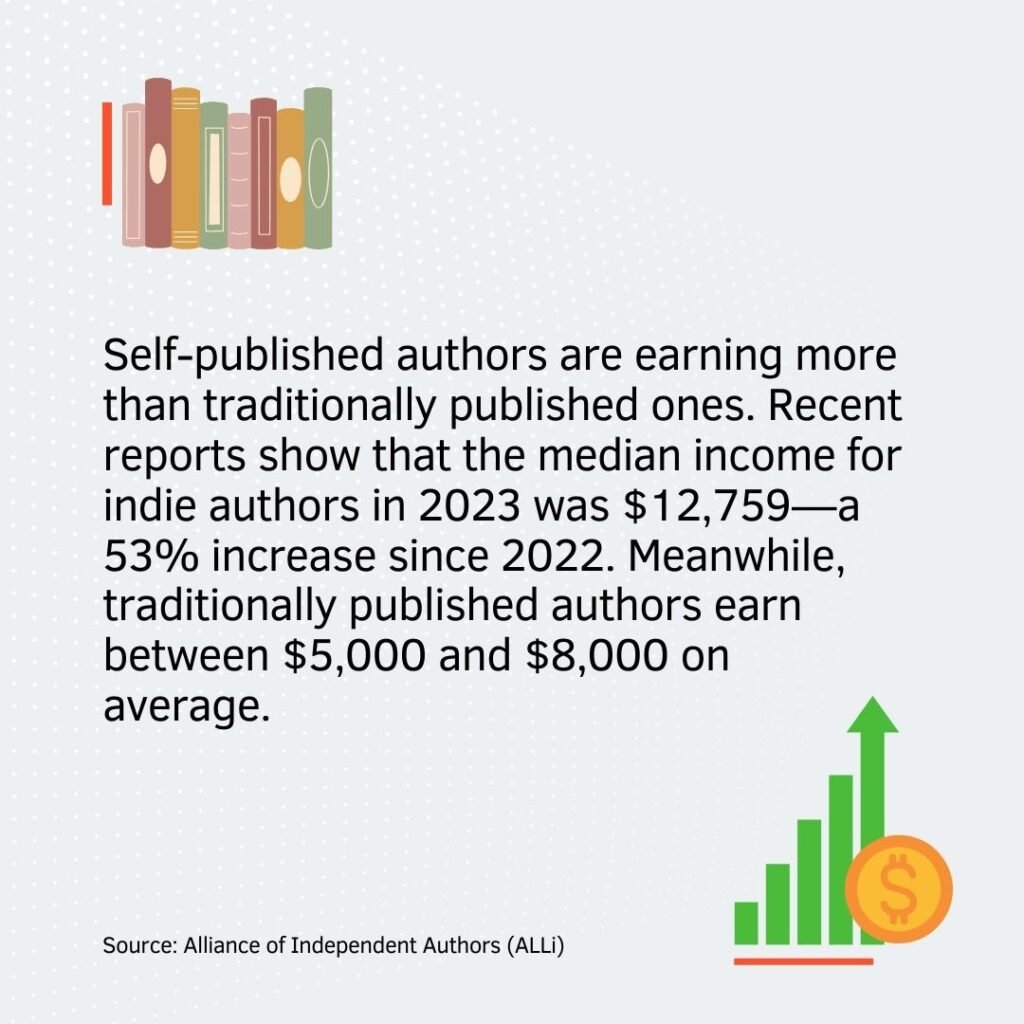
Self-publishing gives authors multiple routes to reach readers, but results depend on the book, audience, distribution choices, and marketing. With the right tools and strategies, you can publish a high-quality book and build a sustainable writing career. Whether you publish ebooks, paperbacks, or both, the key is persistence, continuous learning, and strategic marketing. Start today and take the first step toward achieving your publishing dreams. For additional practical guidance, see our children’s picture book publishing guide and publishing articles.