
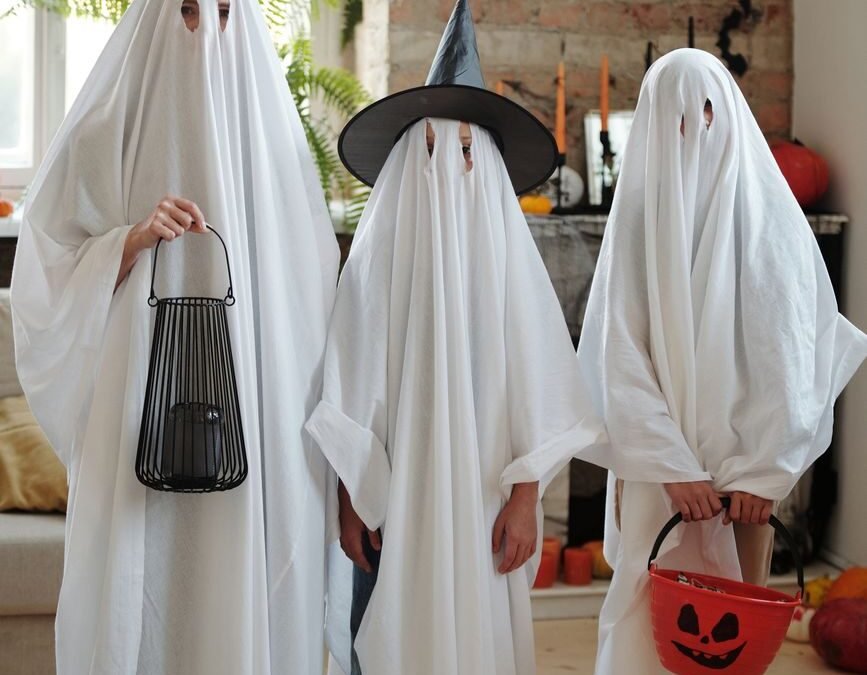
Every Halloween, perfectly ordinary people make some unusual wardrobe decisions.
Kids become witches, dinosaurs, superheroes, ghosts, princesses, zombies, and occasionally something that requires a parent to spend three hours assembling cardboard boxes with a hot-glue gun.
Adults do it too.
Then everyone walks around acting as though dressing like a giant inflatable chicken on a Tuesday night is completely normal.
But why?
Why do we wear costumes on Halloween?
The answer goes back much further than costume stores, plastic vampire teeth, and superhero masks.
Halloween Costumes Are Older Than You Think
Some of the traditions that eventually became part of Halloween have roots in Samhain, an ancient Celtic festival held around the transition from summer into winter.
People believed this was a time when the boundary between the living world and the supernatural world was especially thin. Historical accounts describe people wearing disguises or costumes as part of seasonal customs that developed around this time of year.
But there’s an important catch:
Halloween wasn’t invented in one place on one particular day.
The holiday we celebrate now developed over centuries, with traditions from different cultures and religious observances mixing and changing along the way.
So there isn’t one person we can blame for making everyone dress like bananas.
Were People Trying to Hide From Ghosts?
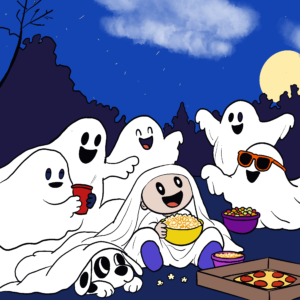
That’s one of the most popular explanations for Halloween disguises.
If spirits were wandering around, disguising yourself might help you avoid being recognized—or allow you to blend in with whatever supernatural creatures were supposedly out there.
Which is an impressive strategy.
Ghost: Are you a human?
Person wearing animal skin: Absolutely not.
Ghost: Understandable. Have a nice evening.
But costumes and disguises weren’t necessarily worn for only one reason. Over hundreds of years, traditions changed, combined, and took on new meanings.
Then Came “Guising”
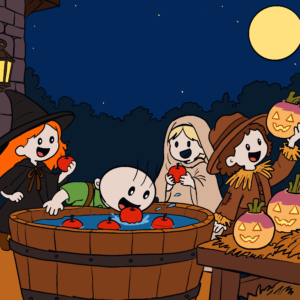
Long before modern trick-or-treating, people in parts of Britain and Ireland practiced traditions that involved dressing in disguise and traveling from house to house.
One of these customs became known as guising.
Children or young people might dress in costume and visit homes, sometimes performing a song, poem, joke, or another little trick in exchange for food, coins, or treats.
Sound familiar?
Put on a costume.
Go to someone’s house.
Do something entertaining.
Receive food.
We’re getting suspiciously close to modern Halloween.
Halloween Comes to America
Immigrants brought their Halloween customs with them to North America, where traditions continued to change.
By the late 1800s and early 1900s, Halloween celebrations in the United States increasingly included parties, games, costumes, and community gatherings.
Costumes became especially popular during the twentieth century, and eventually companies began producing Halloween costumes commercially.
That made dressing up easier.
No animal skins required.
So When Did Superheroes Show Up?
Eventually Halloween costumes stopped being mostly ghosts, witches, and other spooky creatures.
People began dressing as characters from books, comics, movies, television shows, and popular culture.
Today, a Halloween costume doesn’t even have to be scary.
You can be a vampire.
You can be a firefighter.
You can be a taco.
You can apparently be almost anything as long as you’re willing to walk around the neighborhood wearing it.
And that’s part of what makes modern Halloween fun: for one night, you get to pretend to be somebody—or something—else.
Did You Know?
Here are a few costume facts to share while everyone is deciding who gets the last miniature candy bar:
Halloween costumes existed long before store-bought costumes. People made disguises from clothing, masks, and materials they already had.
Going door to door in disguise isn’t a modern invention. Customs such as guising existed long before today’s trick-or-treating.
Halloween costumes haven’t always been cute. Early disguises could be deliberately frightening or strange.
Modern costumes reflect popular culture. That’s why Halloween changes along with the characters, movies, games, and stories people love.
So the kid dressed like a Minecraft Creeper and the person hundreds of years ago wearing a creepy homemade disguise have something surprisingly weird in common.
They’re both part of a very long tradition of people deciding that autumn is an excellent time to dress strangely.
Halloween Is Full of Questions
Why do we wear costumes?
Why do we go trick-or-treating?
And why did humans collectively decide that October should involve ghosts, candy, skeletons, and enormous orange fruits with faces?
Those are exactly the kinds of questions Gus likes to ask.
In Why Do We Celebrate Halloween?, Gus tries to figure out why we celebrate Halloween—with several ridiculous guesses before he gets to the real history behind the holiday.
Because Halloween is weird.
And that’s precisely why it’s worth asking questions about.
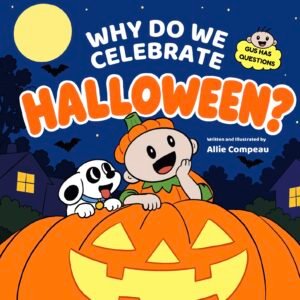
Big Questions. Ridiculous Guesses. Real Answers.
Trackbacks/Pingbacks