
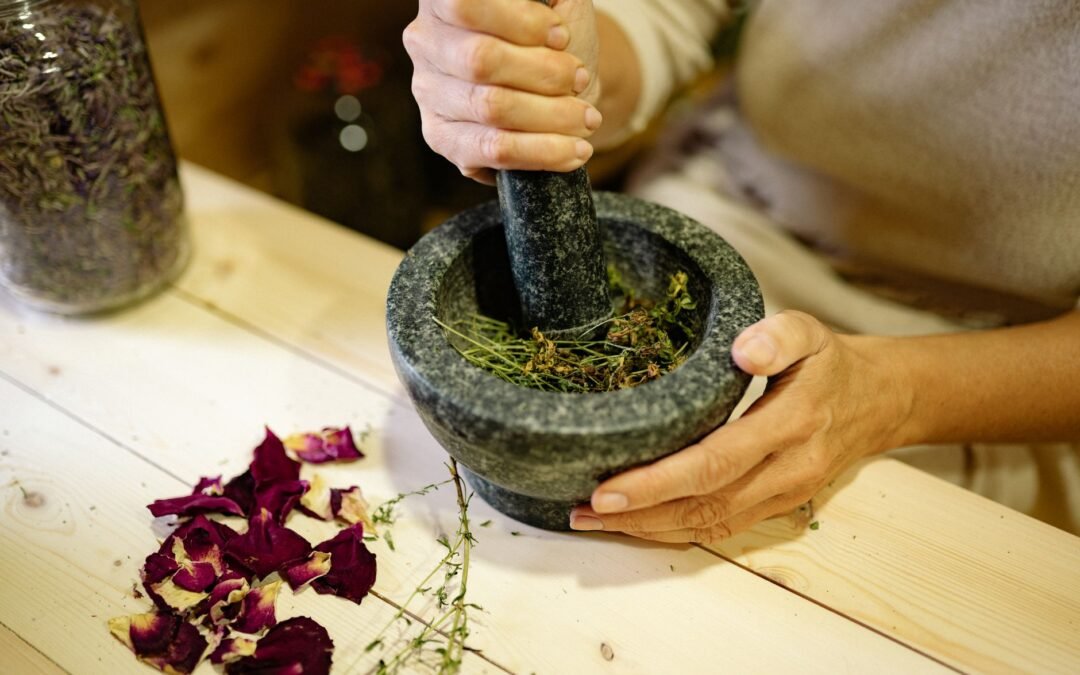
An herbal tradition crossed the Atlantic
The English settlers of early New England did not arrive without knowledge of medicinal plants. European households had centuries of experience growing, gathering, drying and preparing herbs. Kitchen gardens served both the cooking pot and the household medicine chest. Written herbals circulated alongside knowledge passed between generations, particularly through the daily work of women who cared for families. The more interesting historical question is not whether colonists understood herbs, but which plants they actually transported, cultivated and recorded in their new environment.
An herbal book associated with the Mayflower
A particularly revealing detail comes from historian George E. Gifford Jr.’s study, Botanic Remedies in Colonial Massachusetts, 1620–1820. Gifford reports that Elder William Brewster owned a botanical book by the Flemish physician and botanist Rembert Dodoens, and associates it with the Mayflower. The work shows that European botanical knowledge was available within the Plymouth community. It is evidence for a book, however, not proof that every plant described in its pages was carried as a seed or living specimen.
What counted as medicine in the seventeenth century?
Herbal preparations were part of a wider medical world that included diet, household care, purging, bloodletting, and theories of the body’s four humors. Practitioners often classified plants as warming, cooling, drying or moistening. Some remedies were useful; others reflected mistaken theories or practices that modern medicine does not recommend. Historical use should never be confused with modern proof of safety or effectiveness. Many plants can interact with medicines or be toxic in concentrated preparations.
Which European herbs were grown in colonial New England?
Gifford’s historical study discusses early New England kitchen gardens modeled on those in Europe and cites John Josselyn’s seventeenth-century descriptions of garden herbs that thrived in the region. Among the plants he identifies in the colonial medical tradition are burnet, ground ivy and feverfew. These are stronger historical examples than a speculative claim that the Mayflower definitely carried packets of rosemary, lavender, sage and every other familiar herb. Records of cultivation in later decades do not automatically establish the exact arrival date or vessel of a species.
Burnet: a garden herb with culinary and medicinal associations
Salad burnet (Sanguisorba minor) was known in European gardens as an edible herb and in traditional medicine. Historical herbalists discussed its astringent qualities, and it appeared in the wider group of Old World plants cultivated in New England. Its inclusion in a seventeenth-century garden is consistent with the blending of food, flavor and household remedies. This is a history of how people used the plant, not advice to treat illness with it.
Ground ivy: a familiar plant in the European herbal tradition
Ground ivy (Glechoma hederacea, formerly placed under other botanical names) has a long history in European folk medicine and household uses. Josselyn’s account, discussed by Gifford, places it among the plants relevant to colonial New England. Common names can be confusing: ground ivy is not the same plant as the climbing English ivy commonly seen on buildings. When researching old herbals, matching historical names to accepted botanical names is essential.
Feverfew: from European gardens to colonial accounts
Feverfew (Tanacetum parthenium, formerly Chrysanthemum parthenium) is another Old World garden plant identified in the colonial herbal record. Its English name reflects historical medicinal associations. Modern research into feverfew is a separate subject, and it is not appropriate to assume that every seventeenth-century claim about it was correct. The historical significance is that colonial households maintained familiar European plants and knowledge rather than starting from nothing.
What about sage, thyme, rosemary and lavender?
These herbs belonged to European culinary and herbal traditions long before 1620. They make sense in a discussion of the broader knowledge settlers inherited. But it is important not to convert their popularity in England into an unsupported assertion that a particular passenger carried them on the Mayflower. A responsible article separates three questions: Was a plant used in Europe? Was it recorded in colonial America? And do we have evidence of when and how it first arrived? Those questions often have different answers.
How did settlers keep herbal knowledge alive?
Seeds and cuttings could be grown in household plots; dried plant materials could be stored; books could preserve names and preparations; and people could teach one another through ordinary work. Colonial gardens were not simply decorative. Herbs might flavor meals, scent rooms, serve in household tasks or appear in traditional remedies. Some imported species naturalized in American landscapes, while colonists also encountered plants native to North America. The botanical history of the region is therefore one of movement, adaptation and exchange rather than a single fixed list.
What can we say specifically about the Mayflower?
The surviving evidence supports the presence of European botanical learning, including Brewster’s herbal, and a colonial tradition of cultivating Old World herbs. It does not provide a reliable itemized inventory of medicinal herb seeds brought on the 1620 voyage. That distinction matters. Saying “early European settlers cultivated feverfew” can be grounded in later seventeenth-century sources; saying “feverfew was definitely packed on the Mayflower” would require evidence we do not have.
Why this history deserves attention
European herbalism was a sophisticated body of accumulated observation, tradition and printed scholarship, even though many of its medical theories were wrong by modern standards. Recognizing that history does not require romanticizing every remedy. It means giving early households credit for the practical botanical knowledge they carried and asking careful questions about which plants appear in the historical record.
A documented list of Old World herbs and useful plants in seventeenth-century New England
There is no surviving comprehensive manifest of every medicinal herb brought by the Mayflower passengers or by all later European settlers. But there is a remarkable seventeenth-century record: John Josselyn’s New-England’s Rarities Discovered (1672). Josselyn separately described plants that appeared after English settlement and garden herbs grown by colonists. These lists provide a much fuller picture than a handful of famous remedies. The categories below mean recorded in seventeenth-century New England, not proven to have traveled on the Mayflower. Some plants were deliberately cultivated; others arrived or spread unintentionally.
European plants Josselyn described as appearing after English settlement
A modern botanical study reproduces Josselyn’s historical list with updated scientific identifications. The following eleven are listed in his category of plants appearing after the English planted and kept livestock in New England:
- Broadleaf plantain (Plantago major)
- Dandelion (Taraxacum officinale complex)
- Shepherd’s purse (Capsella bursa-pastoris)
- Common mallow (Malva neglecta)
- Prostrate knotweed (Polygonum aviculare)
- Curly dock (Rumex crispus)
- Common groundsel (Senecio vulgaris)
- Black nightshade (Solanum nigrum complex; identification and toxicity require caution)
- Annual sowthistle (Sonchus oleraceus)
- Common chickweed (Stellaria media)
- Stinging nettle (Urtica dioica complex; North American native lineages also exist)
These plants did not all serve exclusively as medicines: several were also food plants or agricultural weeds. Josselyn’s grouping is historical evidence of their appearance and spread, not proof that colonists intentionally carried every one as a remedy.
Other European-associated plants identified in Josselyn’s account
The same botanical study notes ten additional plants that Josselyn mistakenly regarded as native to both England and New England. Their identification, geographic origins, and historical taxonomy require care, but they belong in a broad accounting of European-associated plants recorded in colonial landscapes:
- Common burdock (Arctium minus)
- Greater celandine (Chelidonium majus)
- Lambsquarters (Chenopodium album complex)
- Ground ivy or alehoof (Glechoma hederacea)
- St. John’s wort (Hypericum perforatum)
- Yellow toadflax (Linaria vulgaris)
- Ladysthumb (Persicaria maculosa, historically Polygonum persicaria)
- Purslane (Portulaca oleracea complex; ancient and widespread distribution complicates origin claims)
- Common tansy (Tanacetum vulgare)
- Corn speedwell (Veronica arvensis)
Herbs and useful plants grown in colonial gardens
Josselyn also listed herbs that settlers attempted to cultivate, including plants that did not reliably survive New England winters. The seventeenth-century garden record and the historical editor’s commentary identify: parsley, pot marigold, chervil, burnet, winter savory, summer savory, thyme, sage, sorrel, spearmint, pennyroyal, rosemary, lavender, lavender-cotton, southernwood, clary sage, anise, fennel, coriander, dill, ground ivy, houseleek, elecampane, comfrey, sweetbriar or eglantine, hollyhock, gillyflower or pinks, and French mallow. These gardens also contained vegetables and edible plants such as cabbage, lettuce, carrots, parsnips, beets, radishes, asparagus and purslane. Not every garden plant was medicinal, and not every one thrived.
Some plants commonly called herbs today have uncertain species identities in early sources, while others were cultivated under names that cover several related species. This is why a historical list should retain its original context rather than present modern botanical identifications as certain where they are not.
Plantain and dandelion deserve particular attention
Broadleaf plantain was long familiar in European household herbalism, including traditional external applications to the skin. Its rapid spread in disturbed ground made it closely associated with European settlement. Dandelion had a long European history as a food and medicinal plant, particularly its leaves and roots. Both appear in the seventeenth-century record of plants established in New England. Neither can be placed aboard the Mayflower specifically on the evidence available.
What this list does—and does not—establish
These records demonstrate that Europeans brought a substantial existing tradition of plant use, garden cultivation, botanical writing and practical medicine to New England. They do not establish that every plant listed was deliberately introduced for healing, nor that European and Indigenous medical traditions were identical. Indigenous communities also possessed their own documented botanical knowledge, including of native North American species. Crediting one tradition accurately does not require erasing the other.
For a fuller historical inventory, consult Josselyn’s New-England’s Rarities (1672), with historical annotations, and the botanical study reproducing Josselyn’s lists (Appendix 2). Historical uses are not medical advice; some of these species are toxic or unsafe in particular preparations.
Interested in exploring herbs beyond the history books? WhistlePig Publishing also offers a Medicinal Herb Coloring Book, featuring illustrated plants and space for personal notes. It is a creative companion for readers who enjoy botanical subjects.
Frequently asked questions
Did the Pilgrims have herbal medicine?
They inherited European herbal traditions, and a botanical book associated with William Brewster is documented in historical scholarship.
Can we list every herb on the Mayflower?
No. A verified cargo list of individual medicinal herb species does not survive.
Were colonial herb gardens only for medicine?
No. Herbs served culinary, household and traditional medicinal purposes.
How did European settlers learn to use medicinal herbs?
European herbal knowledge developed over centuries through household traditions, gardens, medical practice, and written herbals. Settlers carried this accumulated knowledge across the Atlantic, where they continued cultivating familiar plants and adapting their practices to a new environment.
Writing historical fiction? Let the herb garden tell a story
A household garden can reveal a great deal about a historical character: what the family grows, what remedies they know, which books they treasure, and how knowledge passes between generations. A character collecting plantain or tending a patch of sage is more believable when those details are grounded in the period’s records. The lists above offer starting points for researching an apothecary, midwife, gardener or family household in historical fiction.
Use the details to shape a scene, then explore WhistlePig Publishing’s practical scene-revision checklist to make sure the historical research serves the characters and plot.
Sources and further reading
- Colonial Society of Massachusetts: Botanic Remedies in Colonial Massachusetts, 1620–1820
- Pilgrim Hall Museum: It Came on the Mayflower